
This movie, and by large the play it was inspired by, pulls its events from the Salem Witch trials in Massachusetts. This page is dedicated to an overview of that event, including the primary people involved, an explanation of the events that occurred, and what the aftermath was. This will be part of the secondary source information the movie pulls from – the other part being the Red Scare of the 1950s, and McCarthyism. Information regarding that can be found in the Red Scare page.
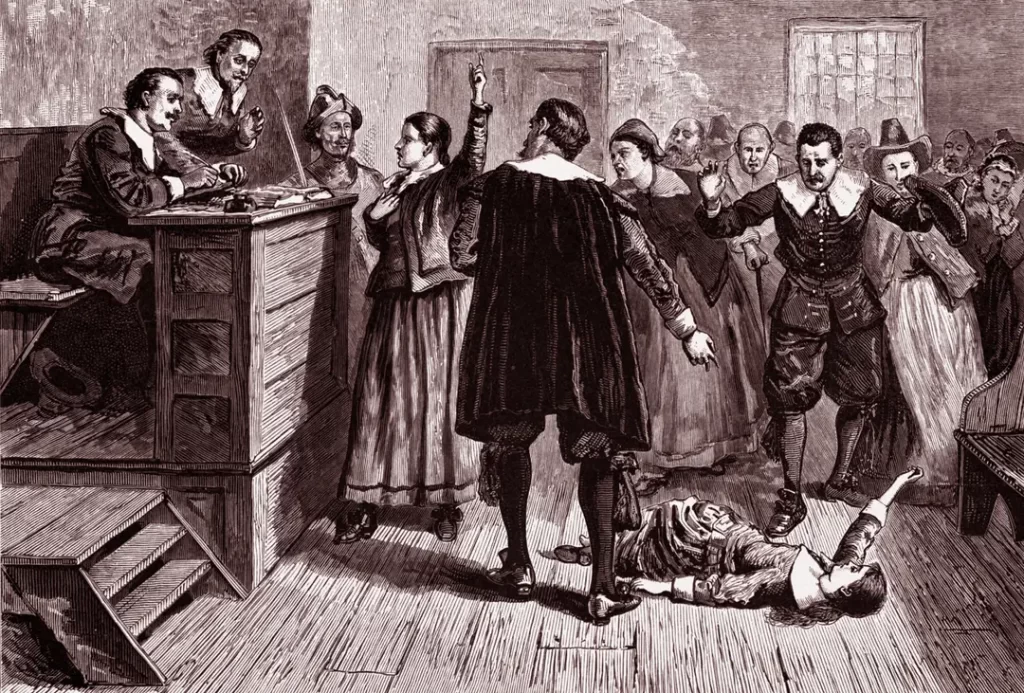
Dates: January of 1692 to September of 1692
Location: Salem Village, in the Puritan Massachusetts Bay Colony (today this town is Danvers, Massachusetts)
The village of Salem in the Massachusetts Bay Colony was a heavily Puritan one. Deeply rooted in religion, people of the town turned to their religious leaders for guidance and instruction. In the trials, people would pull on their principles as Puritans to explain why they were not witches. The fear of the Devil infiltrating their town was something the people of Salem were deeply afraid of.
A timeline of the events goes as follows:
January 1692: Two girls, Elizabeth “Betty” Parris (9) and Abigail Williams (11 or 12) begin having “fits” of convlusions and visions in the household of Reverend Samual Parris. Accusations quickly turn to Tituba, Rev. Parris’s enslaved woman.
February 1692: Two other girls, Ann Putnam Jr (12) and Elizabeth Hubbard (17) beign to experience similar reactions like Elizabeth and Abigail. Two more women are accused of bewitchment alongside Tituba – Sarah Good and Sarah Osborne.
March 1692: Interrogations begin. At this point, multiple people across the town have been accused of witchcraft, and it is spreading rapidly. Tituba confesses to witchcraft and implicates Sarah Good and Sarah Osborne. Although Tituba later recants her testimony, the damage has been done.
April 1692: John Proctor is accused of witchcraft. He has been continually outspoken against the Salem Witch Trials, he is the first man to be arrested for witchcraft.
May 1692: No trial has yet occurred, but Sarah Osborne has died in jail in Boston. She was the first to die of these events.
June-August 1692: The first trial for witchcraft takes place on June 2nd. Bridget Bishop is the first women to be found guilty, and is later hanged on June 10th. In the months of July and August, 10 more people are found guilty and hanged, among them being Sarah Good and John Proctor, one of the only men to be found guilty of the crime of witchcraft.
September 1692: A growing discontentment for the trials rises. The governor of Massachusetts gets invovled and dissolves the court in October. About 20 people died as a result of these trials, over 150 were accused.
May 1693: Tituba, the first person to be accused, finally has her trial. She is released, and dissapears from historical record.
Picture Citation: Salem Witch Trials: Who Were the Main Accusers? | HISTORY
*A note: All sources used have been referenced on the Citations page. To ensure there is no accidental plagarism, I have cited any source I came into contact with.*